Quiet wedding in Provence: intimate, not a budget wedding
Quiet wedding: what we're really talking about
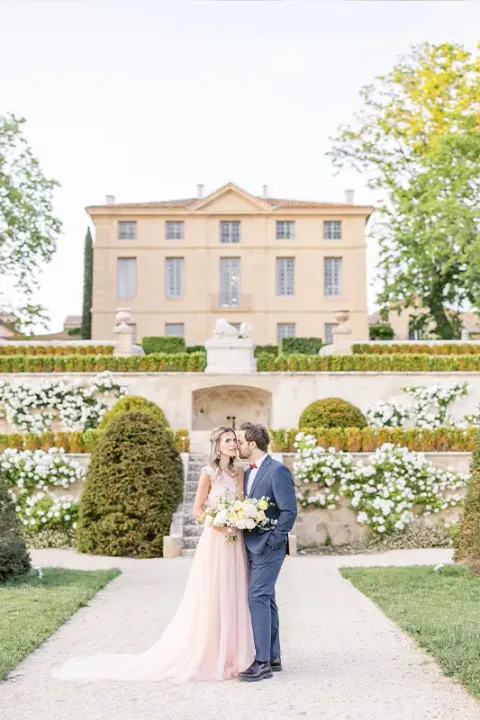
The term has been all over wedding magazines for two years, borrowed from the “quiet luxury” trend in fashion. Misunderstood, it puts people off. Some couples hear “small wedding on a budget”, others hear “sensible wedding where everyone is politely bored”. It's the opposite.
A quiet wedding is a wedding that isn't trying to impress outsiders. It's made for the people who are there. A short guest list, usually between 25 and 60, chosen one by one. A private venue. Suppliers you don't see at every wedding. And a party, a real one, that ends late because everyone knows each other and nobody wants to leave.
What goes is the one-upmanship: the flower wall for the photo, the photobooth, the mass-produced favours, the seating plan with 15 round tables. What stays gets more room.
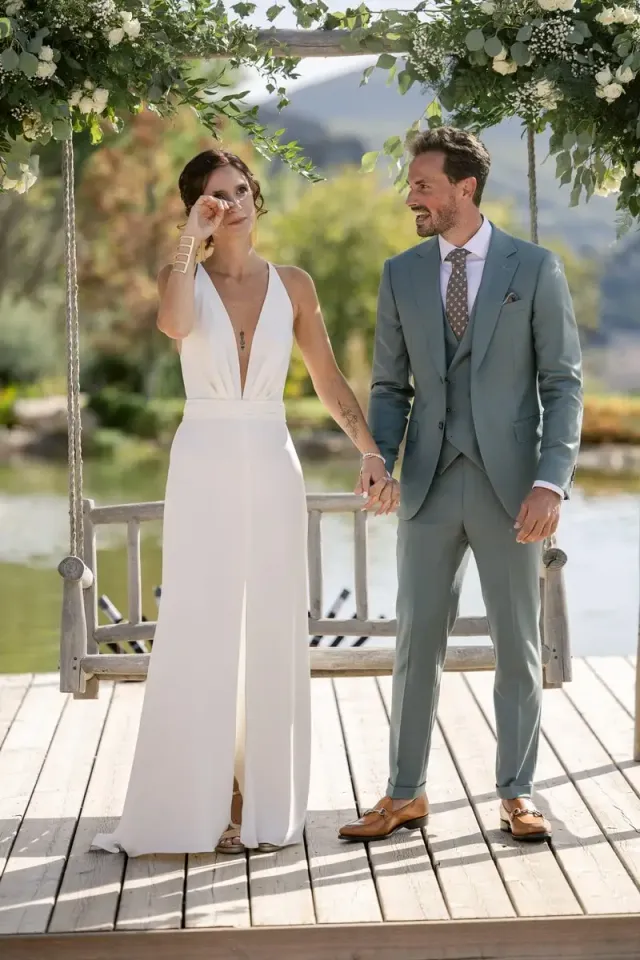
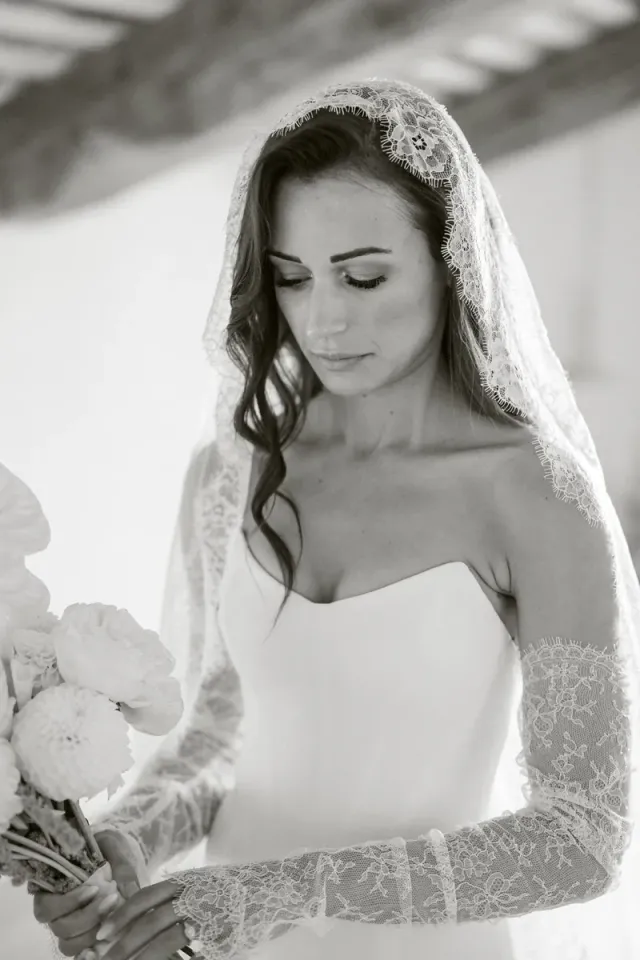
Not a budget wedding
I tell couples on the first call: a quiet wedding often costs less overall than a 150-guest wedding, but a lot more per guest. That's the whole idea. The money that doesn't go into room décor or a DJ with an LED screen goes into a chef cooking in front of you, wines from a Gigondas grower, a second night at the estate so guests don't have to drive home at 2am.
You shorten the list so you can talk to everyone, not to shrink the bill.
Quiet wedding or elopement: the real difference
On paper, the two formats look alike: few people, a carefully chosen place, no staging. They often get mixed up. Yet they answer different wishes.
An elopement is centred on the couple. The two of you, a celebrant, sometimes your witnesses or parents, rarely more than ten people. No reception in the traditional sense: dinner at a restaurant, a night in a beautiful hotel, and plenty of time for photographs, often in two settings on the same day (a calanque in the morning, a lavender field at sunset). Some couples only tell their families afterwards.
A quiet wedding is centred on the guests. You don't shorten the list to be alone, you shorten it to host the people who remain better, whether there are 25 or 50 of them. There's a ceremony in front of them, a long dinner, a party, and often a whole weekend around it. The budget goes into hospitality (chef, accommodation, suppliers) rather than the couple's travel.
My way of settling it with couples who hesitate: if the real question is “where do the two of us want to be that day?”, it's an elopement. If it's “who do we want to spend this weekend with?”, it's a quiet wedding.
| Elopement | Quiet wedding | |
|---|---|---|
| Guests | 0 to 10 | 25 to 60 |
| Focus | The couple | The couple and their closest people |
| Reception | Restaurant dinner or a small gathering | Dinner, drinks and dancing |
| Length | One day, sometimes half a day | One day or a full weekend |
| Budget priority | Locations, travel, photography | Hospitality, food, suppliers |
| Photographs | Almost all the time spent on the couple | The couple and the guests' story |
Between the two there's a grey zone of around 10 to 20 guests, sometimes called a micro-wedding. For me, the difference shows mostly in the gallery: with an elopement, nearly every image is a portrait of the couple in the landscape; with a quiet wedding, I share my attention between you and your people, and the photographs tell their day too.
The people who truly matter
The guest list is the real work of a quiet wedding. It's rarely done in one evening. The couples I photograph often start from a simple question: who do we want to have dinner with three nights in a row? Colleagues, long-lost cousins and courtesy plus-ones fall away on their own.
You can see that choice on the day. With 35 guests, nobody is waiting for dinner to end while scrolling their phone. Speeches are shorter and funnier, because they're given to people who already know every story.
One thing not to overlook: tell the people who won't be invited early, and explain the format. Some couples then host a larger drinks party back home a few weeks later. It avoids hurt feelings and gives you a second party.
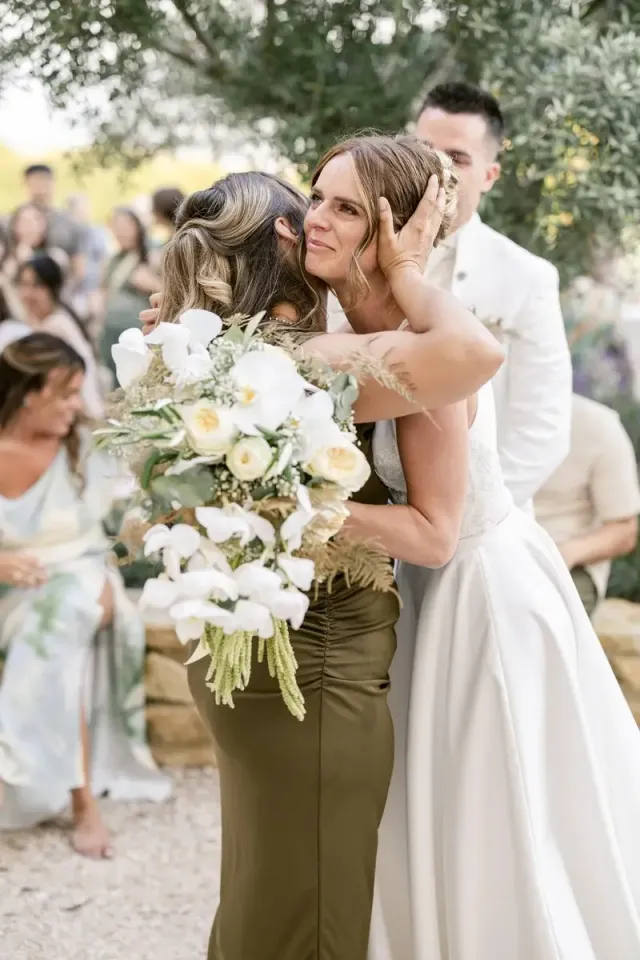
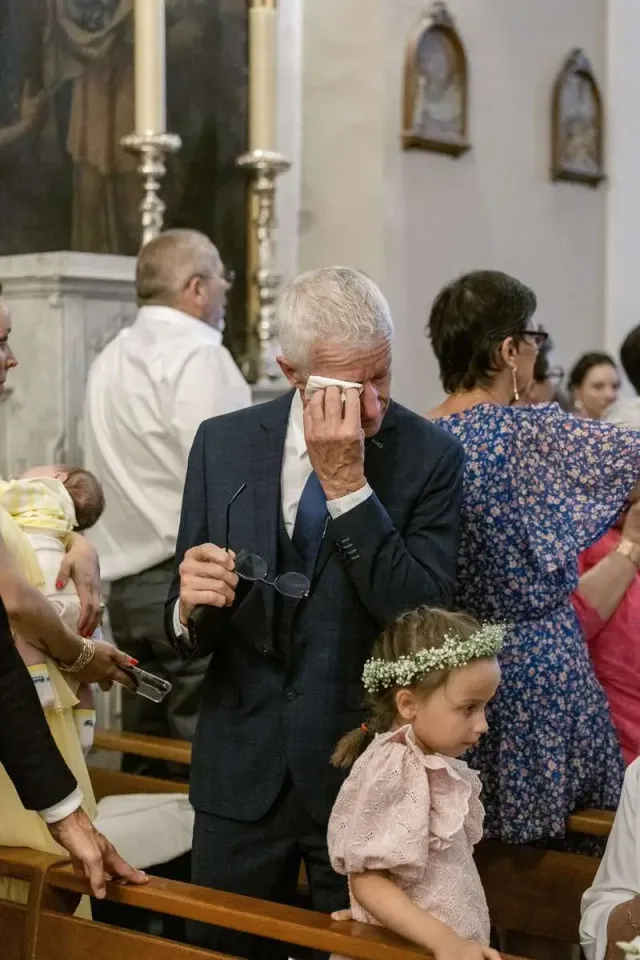
Cécile and David, three days in Vacqueyras
In 2026, Cécile and David got married at a private estate in Vacqueyras, below the Dentelles de Montmirail, with 35 guests. They asked me to follow them over three days rather than one, and it's probably the best example I can give of what a quiet wedding is.
The night before, an intimate welcome dinner with the guests who had already arrived. On the wedding day, a humanist ceremony in the garden late in the afternoon, drinks by the pool and dinner outdoors. The day after, a brunch, with the faces of those who had danced late.
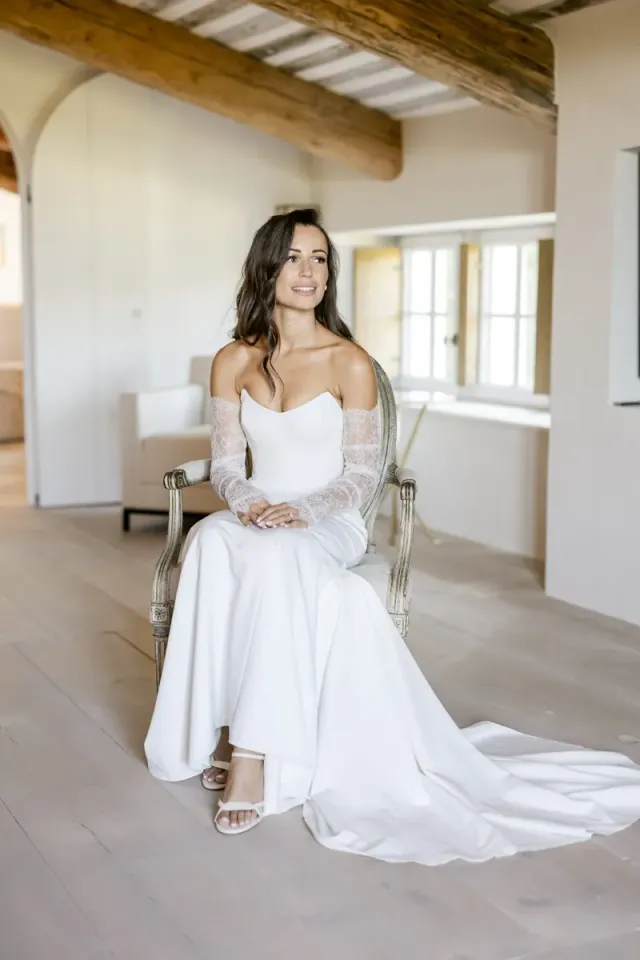
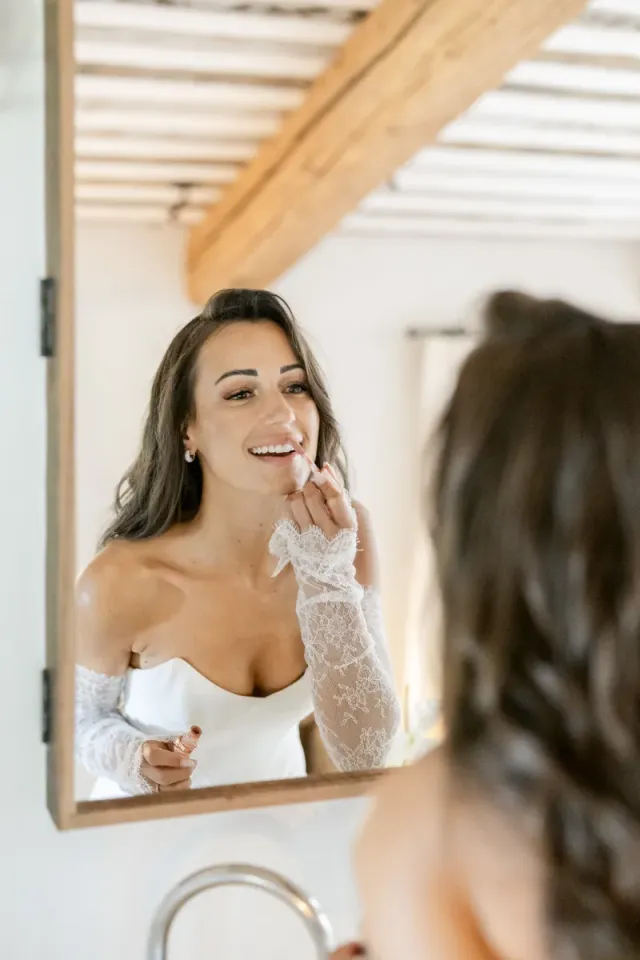
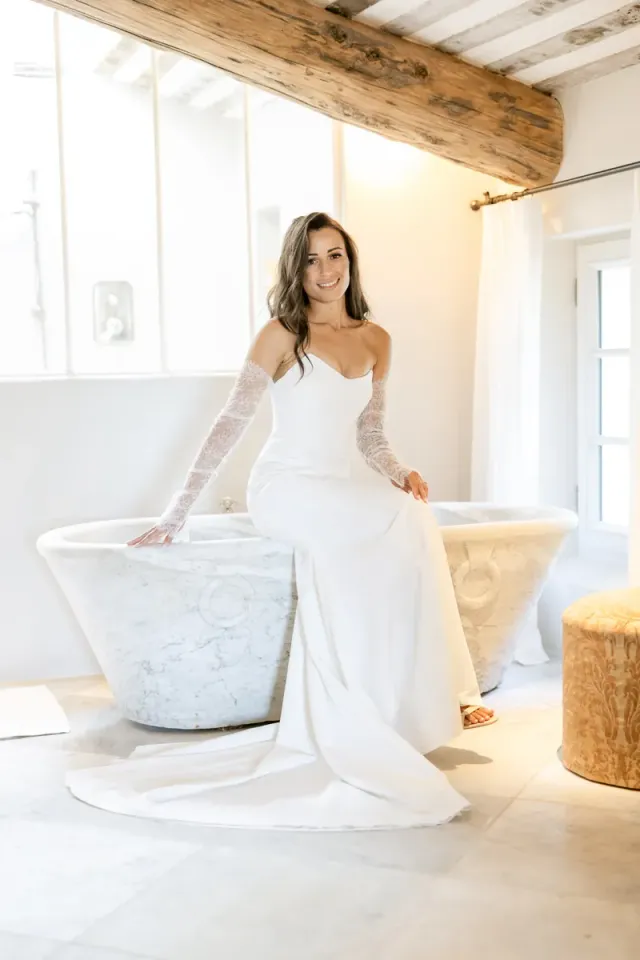
On a traditional wedding, the day is a race. Over three days, I never had to steal a moment. Guests had seen me at dinner the night before and stopped noticing the camera on the wedding day. And the brunch gives you images no wedding timeline plans for: the couple in everyday clothes, conversations picking up where the party left them, the last goodbyes before the drive home.
I won't go through the hour by hour here. If that's what you're after, my timeline guides for a civil ceremony at 11am or at 2pm adapt very well to a smaller format.
Planning, even more than elsewhere
Quiet doesn't mean improvised. A self-catered estate means you bring in every supplier and handle water, power, toilets for 35 people and the sleeping arrangements. A wedding planner, even for a few days of coordination, is never wasted.
The same points come up every time. The venue has to match the list: a room for 150 with 35 guests inside looks empty, in person and in pictures. Lighting for an outdoor dinner needs planning, because candles alone won't carry a table of 35 past 9:30pm. And the mistral, in the Vaucluse as in the Alpilles, always calls for a plan B for flowers and tablecloths.
To find the venue, the Luberon, the Alpilles and the Vaucluse around Vacqueyras are full of bastides that size. I've gathered several in my selection of the best wedding venues in Provence.
Suppliers you don't see everywhere
This is where a quiet wedding gets fun. With 35 guests instead of 150, services that would be unaffordable or impossible at scale suddenly become possible.
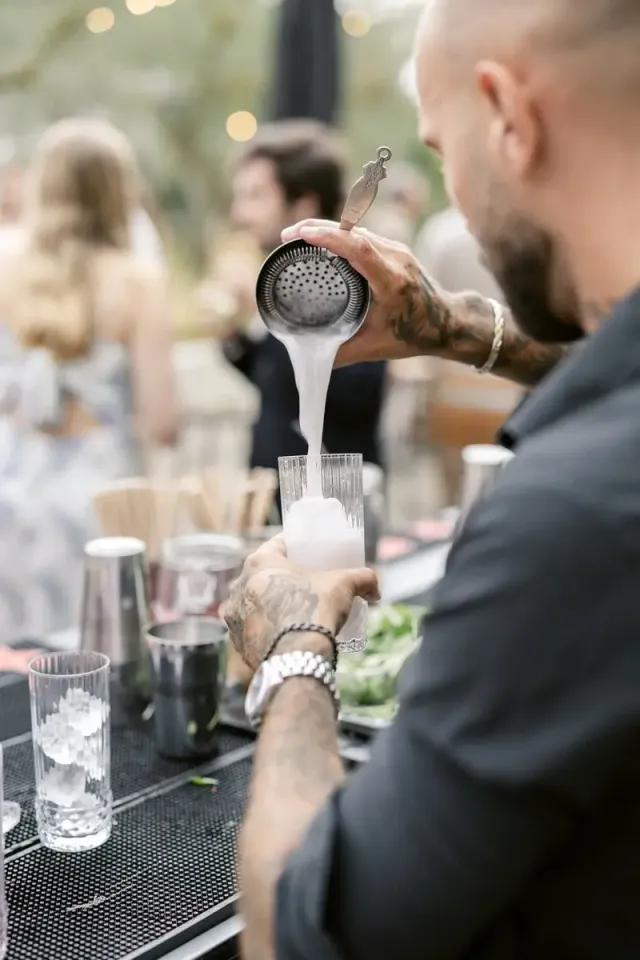
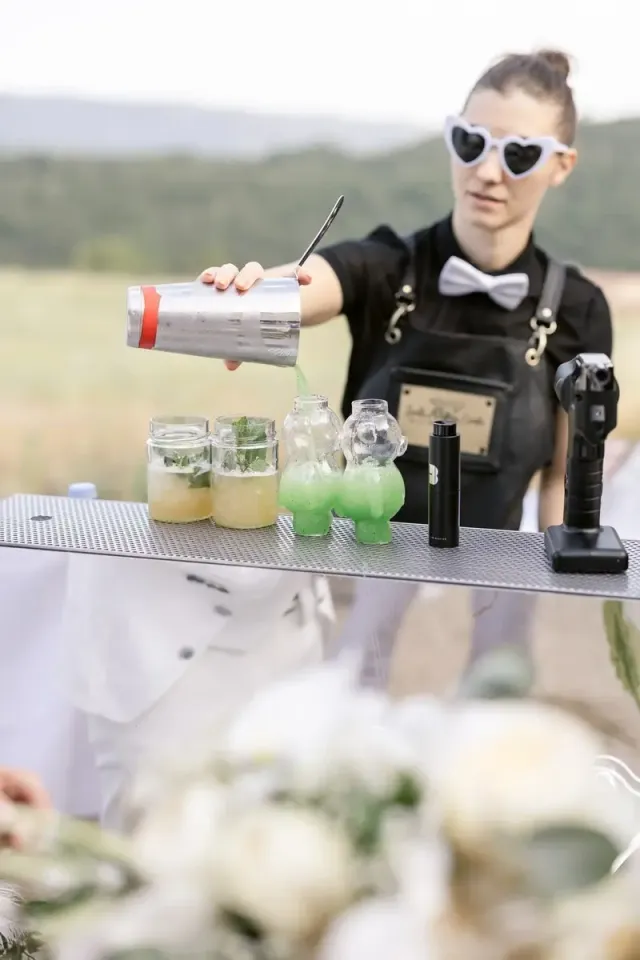
A mixologist first. A cocktail bar set up in the garden, two or three signature cocktails created for you (one with thyme from the estate, one reinventing pastis), and someone behind the counter explaining what they're doing. Guests gather at the bar, which gives the drinks reception a natural meeting point.
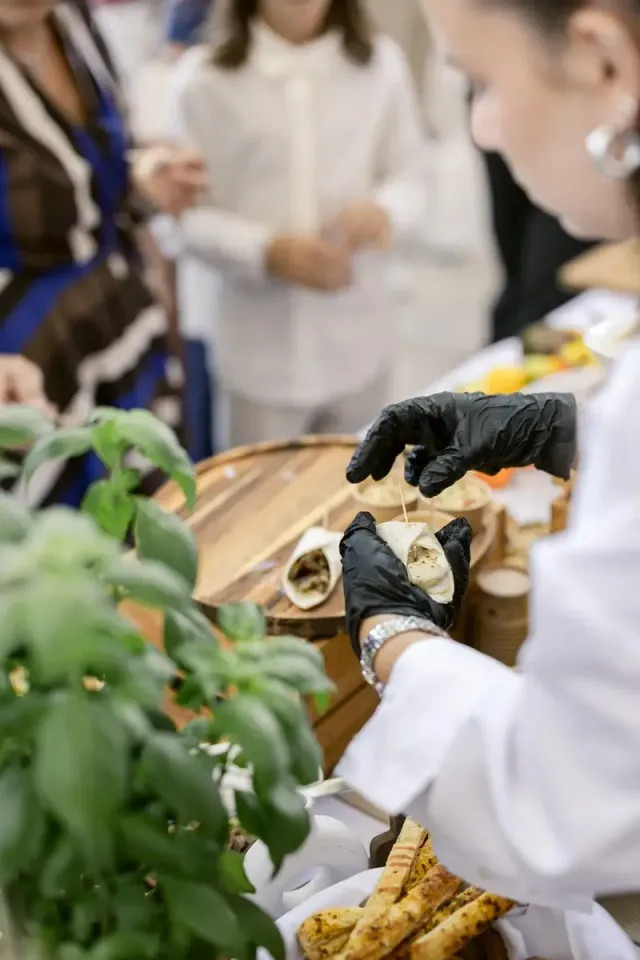
Then a private chef. Rather than a caterer plating 150 identical dishes in the kitchen, a chef cooking in full view on a barbecue, a plancha or a wood oven, coming to the table to present each course. In Provence, that can be a menu built that morning from the Carpentras or Vaison-la-Romaine market.
And the cooking workshop, which I love for the day before or after the wedding. Fresh pasta, tapenade, fougasse: a chef runs an hour-long session, guests cook together and what they make becomes lunch. For families meeting for the first time, nothing breaks the ice better.
You can add a tasting with a Dentelles winemaker, a cheesemonger cutting to order, an ice cream tricycle in the afternoon, a calligrapher writing place cards during drinks. Not all at once. Two well-chosen ideas beat a catalogue.
A party, a real one
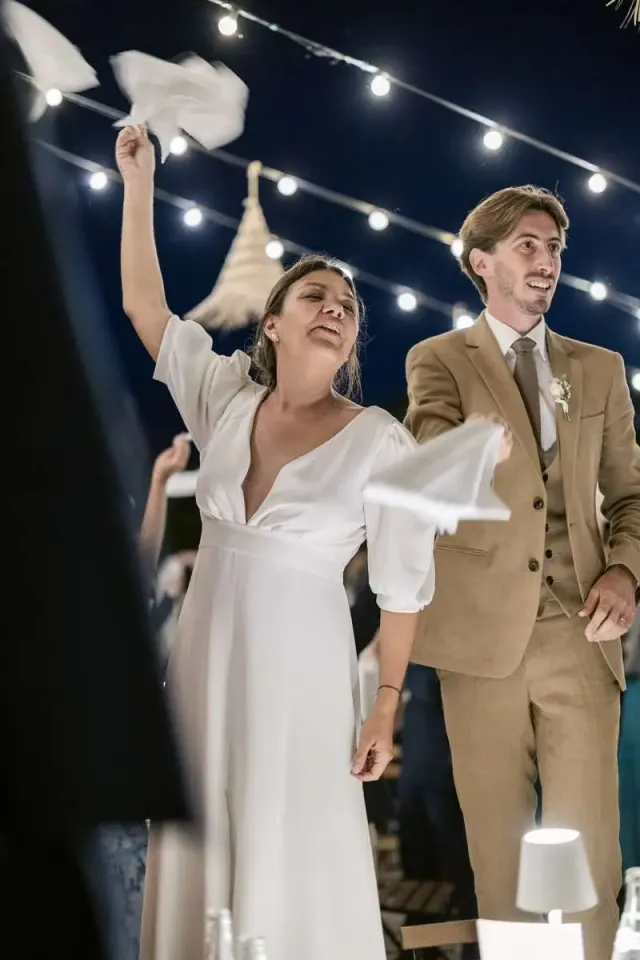
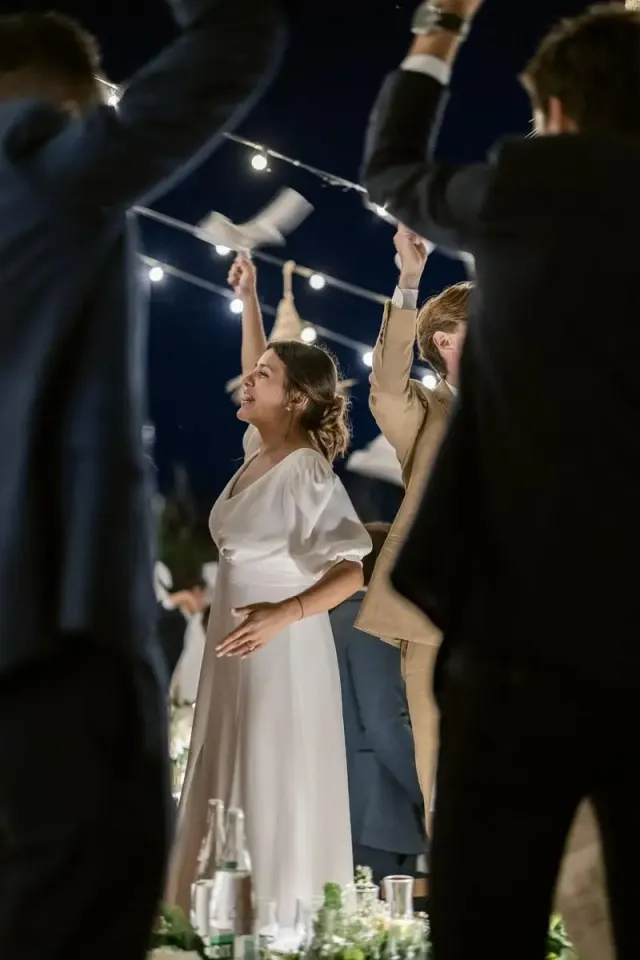
A quiet wedding isn't a silent wedding. It's discreet towards the outside world, not on the inside. The best evenings I've photographed in recent years were often the smallest, because 35 people who know each other hit the dance floor faster than 150 who are just meeting.
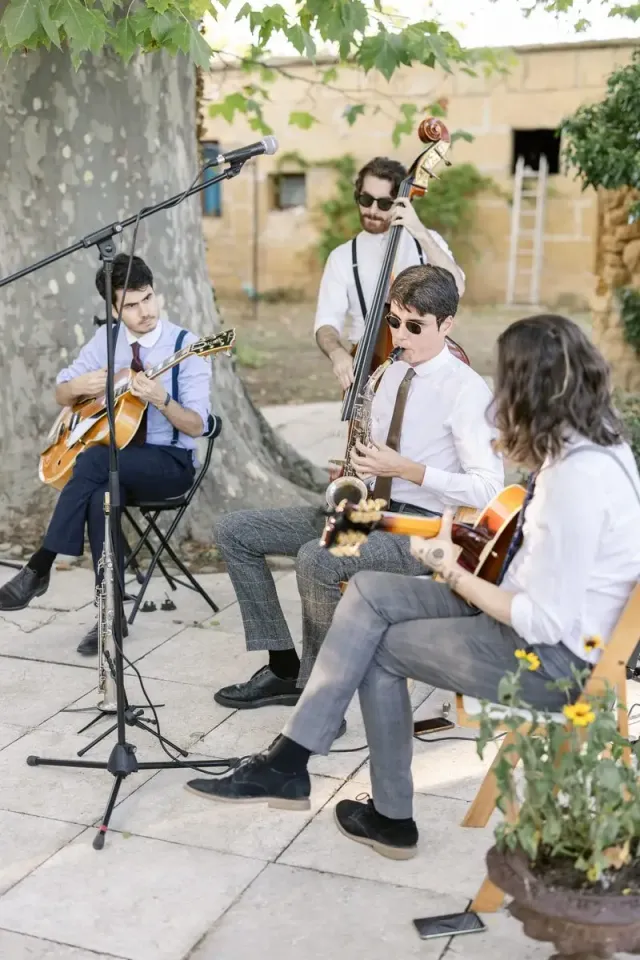
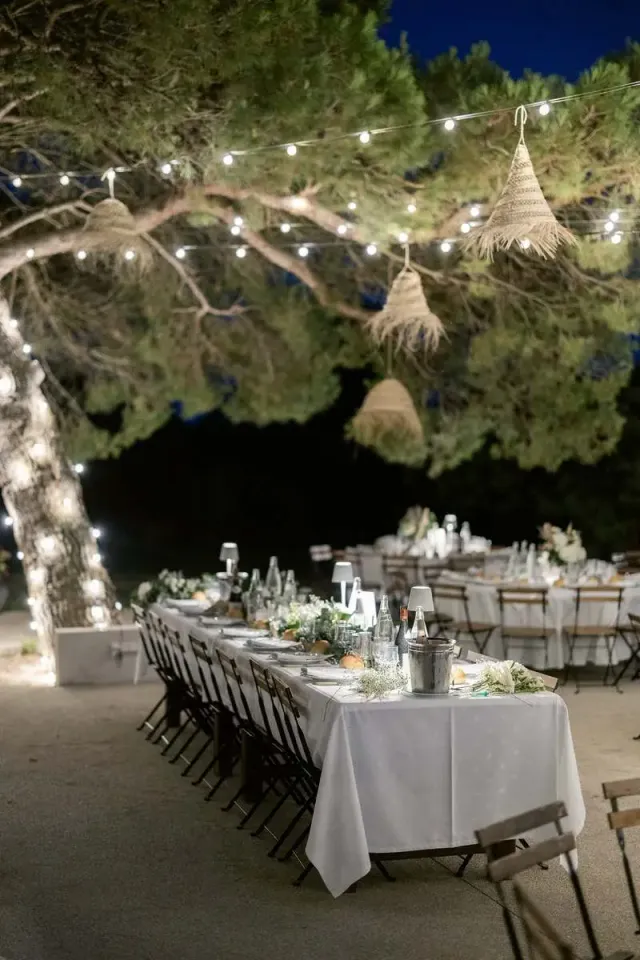
A gypsy jazz trio during drinks, festoon lights in the pines, then the dance floor opening at dessert: that's the formula I see most often. The DJ isn't banned. They simply play for a house, not a function hall, and they know the songs that get grandma up.
The style: fabric over ornament
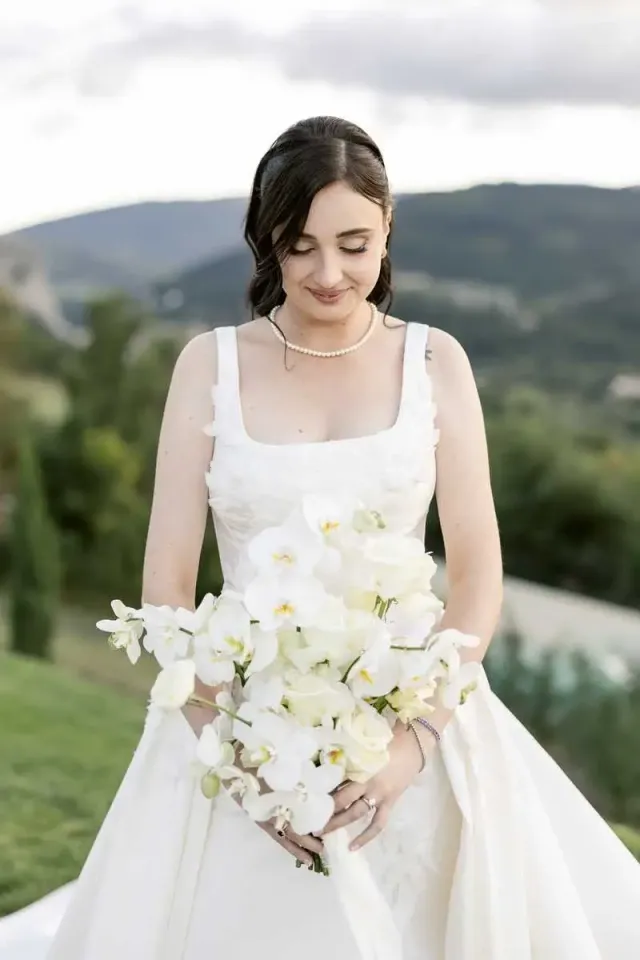
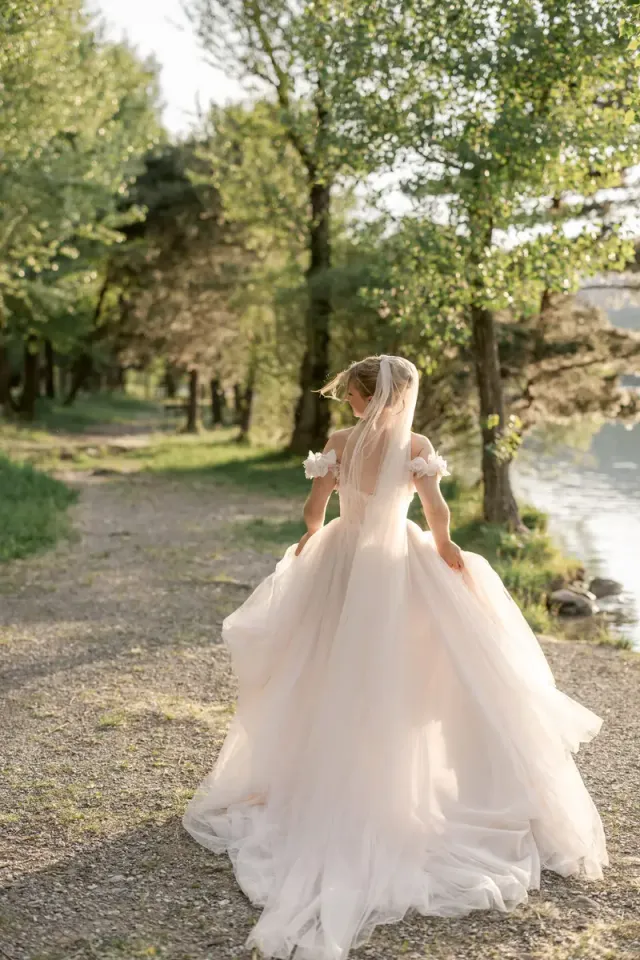
For outfits: crepe, heavy satin, washed silk. A very clean cut, sometimes a tailored suit or a jumpsuit, pearls and nothing else. For the groom, a linen or tropical wool suit in blue grey or sand.
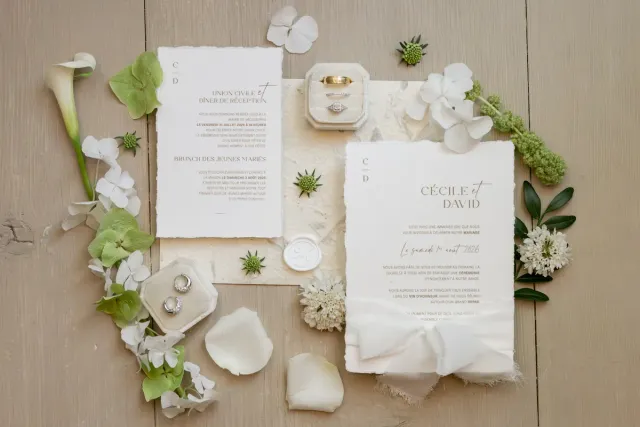
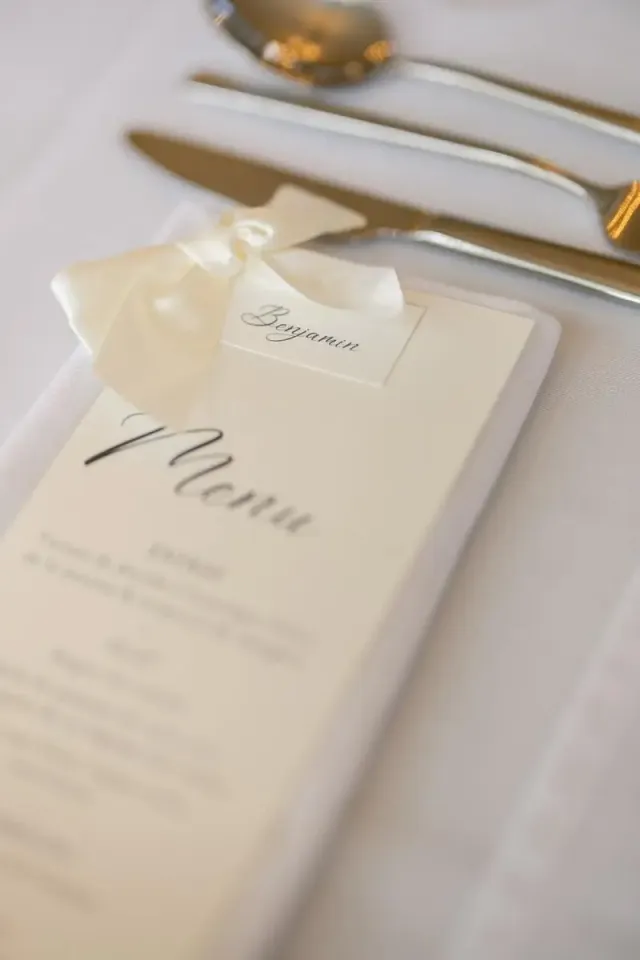
For flowers: white, green, lots of foliage, olive branches cut that morning. The stationery follows: deckle-edge cotton paper, a single ink colour, each guest's name handwritten on their menu.
And one long table rather than six round ones. Everyone sees each other, conversations travel from end to end, and nobody is stuck at the table at the back.
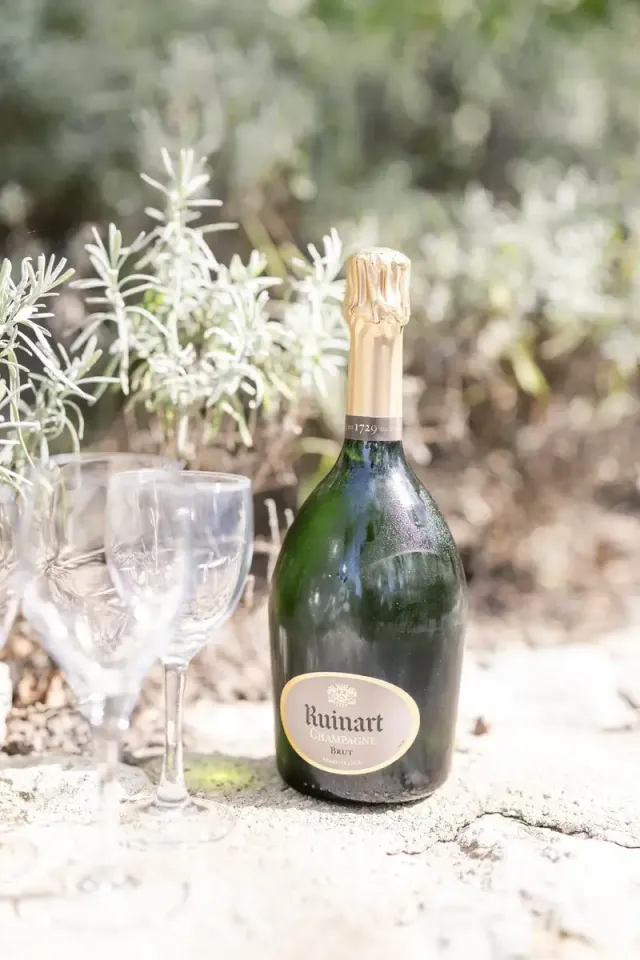
The budget of a quiet wedding
For 35 to 40 guests in Provence, these are the ranges I come across most often. They're indicative, so check them with each supplier.
- Private estate or bastide for 2 to 3 nights: €6,000 to €15,000
- Private chef or caterer, wine included: €150 to €250 per person
- Mixologist and cocktail bar: €1,500 to €3,500
- Cooking workshop run by a chef: €60 to €120 per person
- Musicians (trio or duo): €1,200 to €2,500
- Flowers and stationery: €2,000 to €5,000
- Photographer: see my article on wedding photographer budget in Provence
The memories: what this format changes for the photos
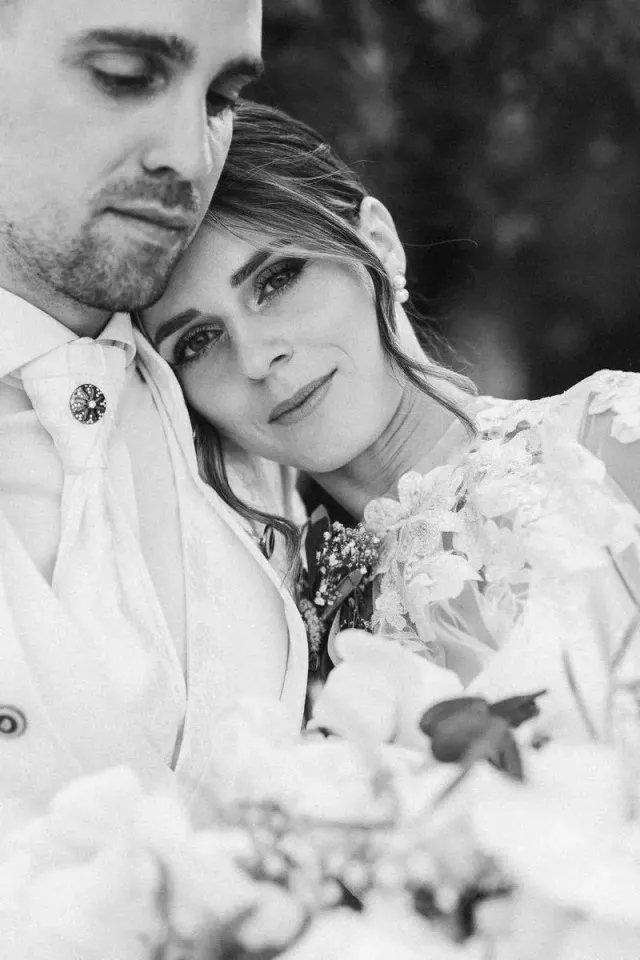
With 35 guests, I know everyone by the end of the first evening. I know who the godmother is, which best friend came down from Lyon, who is going to cry during the speech. Every single person ends up in the gallery, not only in the group shot.
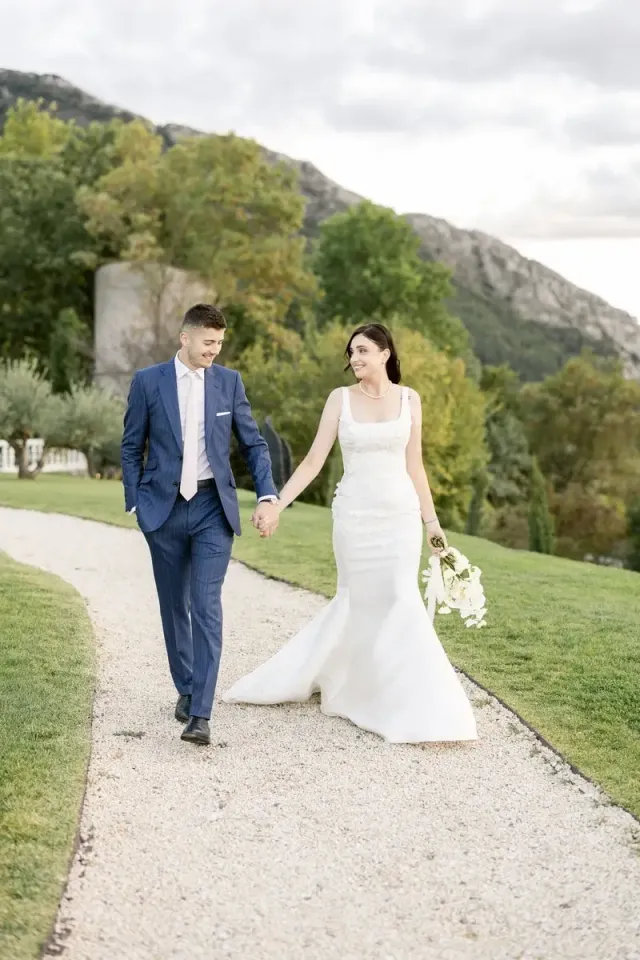
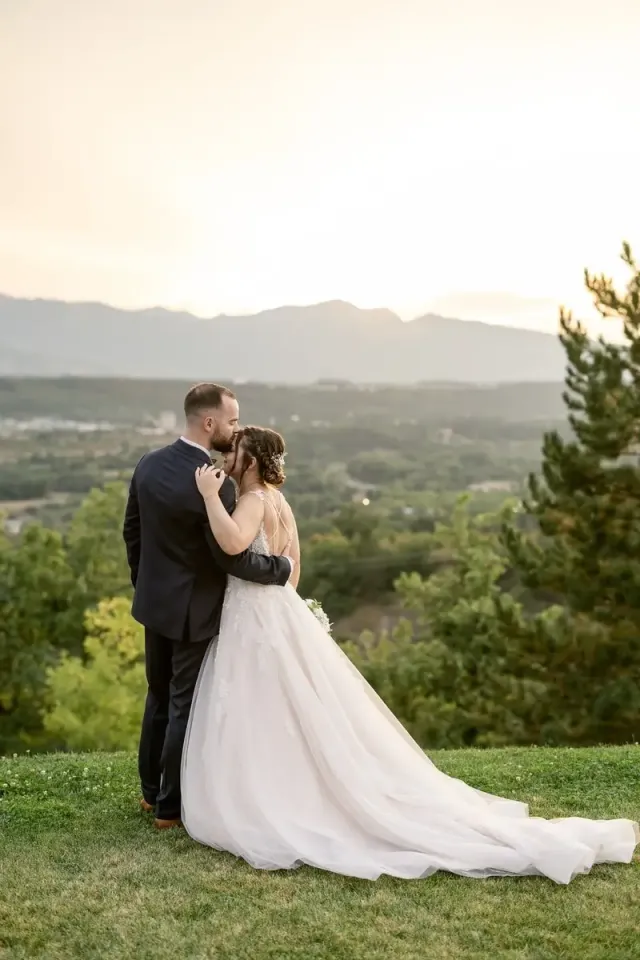
The pace changes too. We can slip away for forty five minutes at golden hour, walk through the vines and come back as dinner starts, without anyone looking for you. That's where my Fine Art approach makes the most sense: natural light, considered compositions, true colours that won't date.
I also push for an unplugged ceremony. One sentence from the celebrant at the start and guests put their phones away: faces turn towards you, not towards a screen. With few people, the effect is immediate.
And when the wedding lasts several days, the gallery tells something other than a single day. It tells a stay, with its quiet moments, its laughter over breakfast, its goodbyes in the car park. Those are often the images couples message me about a year later.
When to have a quiet wedding in Provence
May, June and September. The days are long, the light drops around 8:30pm in June, and private houses are easier to book than in July. October works very well for a short list that can dine indoors, with the vines turning red around Vacqueyras and Gigondas.
---
Frequently asked questions
What is a quiet wedding?
An intimate wedding with a short list of close family and friends (usually 25 to 60), restrained décor and a budget focused on hospitality: the venue, the food, the suppliers and the party. The term comes from the “quiet luxury” trend.
Is a quiet wedding a cheap wedding?
No. It often costs less overall than a big wedding, but more per guest. The budget moves away from décor and entertainment towards food, accommodation and more original services.
What's the difference with an elopement?
An elopement is centred on the couple, with ten people at most and no traditional reception. A quiet wedding is centred on the guests (25 to 60), with dinner, a party and often a whole weekend.
What original suppliers work for an intimate wedding?
A mixologist with signature cocktails, a private chef cooking in view, a cooking workshop the day before or after, a winery tasting, live musicians. Two or three well chosen ones are enough.
Should the photographer cover several days?
It isn't required, but it suits the format best. The welcome dinner and the brunch produce more relaxed images than the wedding day, and guests are used to the camera by the time the ceremony comes.
---
Quiet wedding photographer in Provence
Every year I photograph intimate weddings across Provence, from the Luberon to the Alpilles and the Vaucluse, for a single day or a full weekend. My editorial and Fine Art approach fits naturally with these slower weddings. Browse my wedding stories or write to me about your project, even if it's still just an idea and a list of fifteen names.
Learn more about my work as a wedding photographer in Provence.